External Integrations with Grawlr: Completing
the SDLC Security
Security tools generate data. Engineering teams make decisions. The gap between those two is where risk grows.
Over the past years, many organizations have improved how they scan, test, and monitor their software and systems. Yet one recurring issue remains - security findings often live inside isolated dashboards. Someone has to remember to log in. Someone has to forward a report. Someone has to escalate an issue manually. That “someone” is usually ... busy.
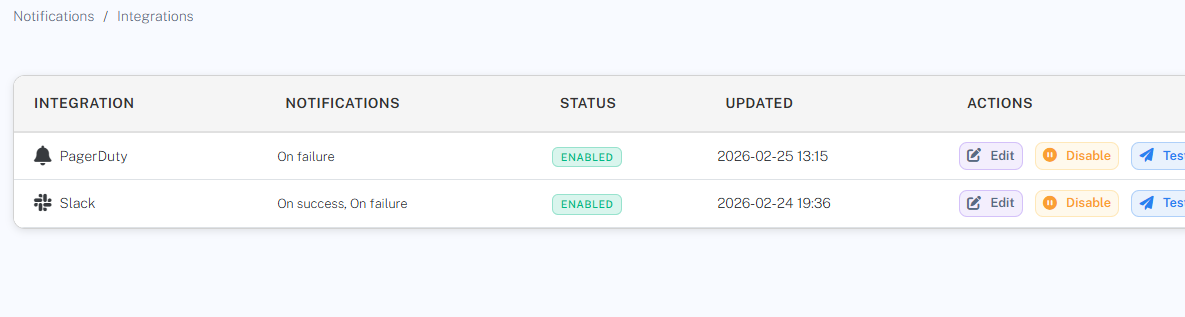
With the latest update, Grawlr introduces external communication integrations with platforms such as Slack, Mattermost, PagerDuty, Opsgenie, Datadog, Zendesk, Freshdesk, and workflow tools like n8n.
Rather than treating this as a feature announcement, it is more useful to ask - what changes inside the SDLC when security communication becomes structured and automated?
Security Friction Inside the SDLC
A typical SDLC includes planning, development, testing, deployment, and operations. Security activities exist at every stage, but they are rarely synchronized with daily workflows.
Planning meetings discuss features and timelines. Developers focus on shipping code. Operations monitors uptime and performance. Support handles customer tickets. Security often runs parallel to these processes instead of being embedded within them. The practical consequence is simple - findings are discovered, but context is lost. By the time someone reacts, the original developer may have moved to another task. Or the issue may have already reached production.
Communication, not detection, becomes the bottleneck.
Planning: Making Exposure Part of Architecture Decisions
In early SDLC phases, teams make architectural choices that define their external attack surface. Yet exposure data is rarely visible during those conversations.
Grawlr routes structured summaries into collaboration channels, exposure trends can become part of planning discussions. If a new service introduces unexpected public endpoints, that signal does not wait for a quarterly review. It appears where architectural decisions are already happening.
This does not slow down planning. It simply reduces blind spots.
Developers already operate inside communication platforms. Introducing yet another security dashboard often creates friction rather than improvement. When findings are delivered into existing engineering channels, remediation happens closer to the moment of introduction. The developer sees the issue in the same environment where discussions and pull requests occur.
This doesn’t magically eliminate vulnerabilities. But it reduces the delay between discovery and action, which is often where cost accumulates!
Shift-left security is not just about scanning earlier. It is about shortening feedback loops.
Testing & Deployment: Differentiating Noise from Urgency
During testing and pre-production stages, teams are exposed to large volumes of information. Not all findings deserve escalation.
External integrations allow routing decisions based on severity or environment. A critical exposure may trigger an alert in PagerDuty. Lower-risk findings might remain within an engineering channel for review.
The key change is not more alerts, but structured escalation. Instead of manually forwarding reports, communication follows predefined paths. This reduces ambiguity about who is responsible for reacting.
Conclusion
Security maturity is often measured by tools, frameworks, and compliance standards. Less attention is paid to how information travels inside an organization and within those frameworks and tools. Yet in practice, communication speed and clarity determine response effectiveness.
By introducing structured integrations across collaboration, incident management, monitoring, and support platforms, Grawlr now becomes more tightly aligned with the SDLC itself.
Detection is necessary. Delivery is decisive. And mature security programs depend on both. Start using Grawlr as part of your SDLC already today!